Climate and seasons
Kota fog: winter fog, haze and low visibility explained
Written by Kota Weather Editorial Team · Updated

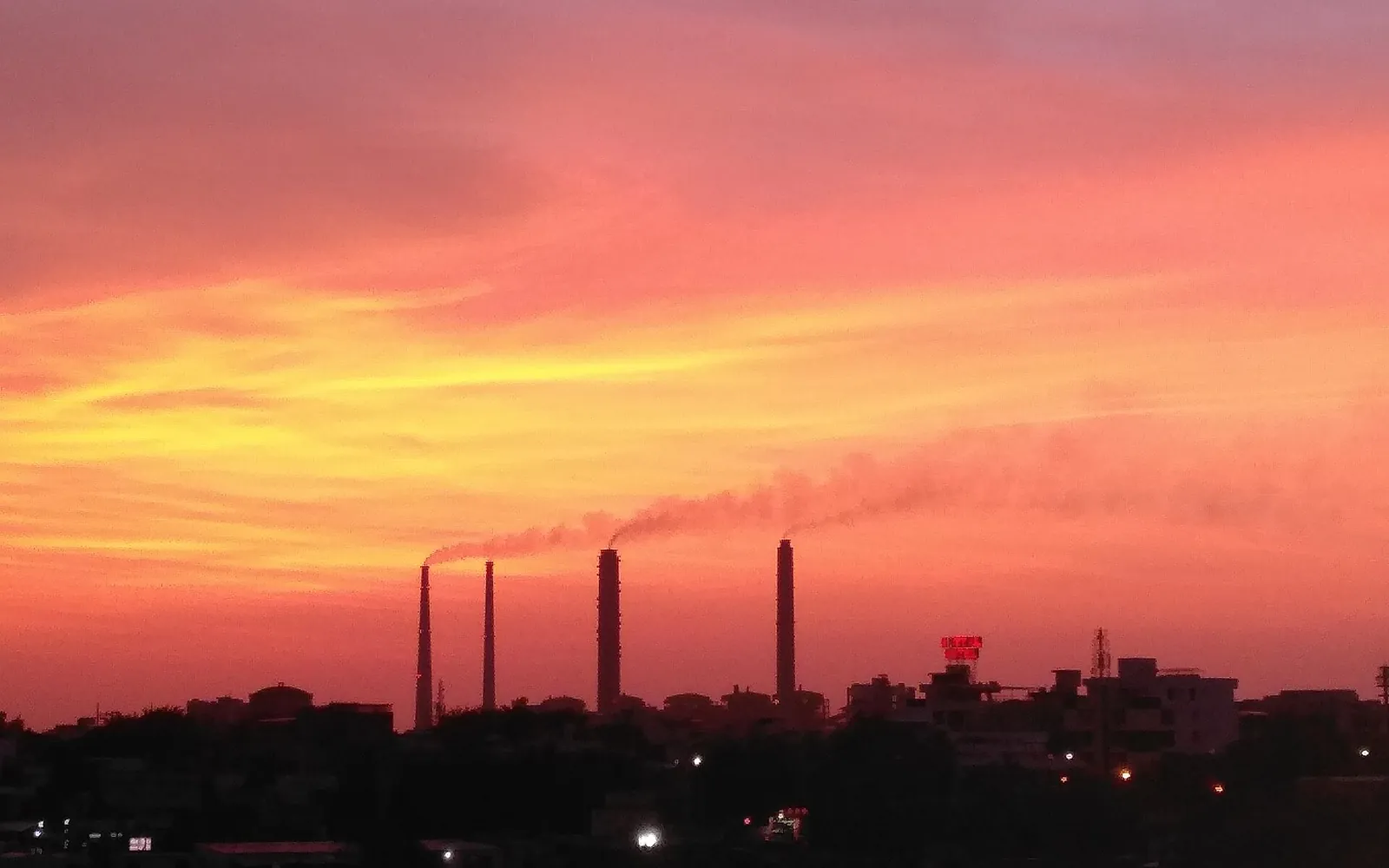
Kota fog is mostly a December and January story, and it is milder than the thick fog that blankets Delhi and the Gangetic plains. Most winter mornings in Kota are hazy rather than truly foggy: the sun rises as a pale disc, the far bank of the Chambal looks soft, and visibility is a few kilometres. A handful of mornings each winter bring real fog, when visibility falls below a kilometre and road and rail travel slow down. This guide uses the India Meteorological Department’s (IMD) Climatological Tables 1991-2020 for the Kota Airport observatory (station 42452) to show when that happens.
These are long-term averages. For tomorrow morning, check IMD’s district warnings and the Kota weather forecast page.
Fog and visibility by month at Kota Airport
IMD records visibility at 08:30 IST and 17:30 IST, and counts days on which fog is observed. The table shows the morning figures for the cooler months.
| Month | Fog days | Mornings with visibility under 1 km | Mornings with visibility 1-4 km | Morning relative humidity |
|---|---|---|---|---|
| October | 0.0 | 0.0 | 9.3 | 51% |
| November | 0.1 | 0.4 | 21.8 | 52% |
| December | 0.4 | 2.7 | 23.8 | 63% |
| January | 1.8 | 4.1 | 20.6 | 67% |
| February | 0.6 | 0.8 | 13.5 | 53% |
| March | 0.0 | 0.1 | 8.4 | 38% |
| Year | 2.9 | 8.3 | 109.8 | 55% |
Two patterns stand out. First, fog days are few: under three a year. Second, reduced visibility is common: on roughly 110 mornings a year the observatory sees only 1 to 4 km, and most of those are between November and February. In December, that is more than three mornings out of every four.
By 17:30 IST the picture is much better. Even in January, visibility under 1 km in the evening is recorded on only about 0.3 days, and 1-4 km on about 7 days.
Why Kota gets winter fog and haze
Radiation fog forms when the ground loses heat on long, clear, calm nights and the air near the surface cools to its dew point. Kota’s winter has all three ingredients at times:
- Long, clear nights. Cloud cover in December and January averages under 2 oktas.
- Calm air. IMD’s tables show calm conditions at the morning observation on 62 percent of days in December and 51 percent in January.
- Moisture. Morning relative humidity rises to 63 percent in December and 67 percent in January. Winter rain from a western disturbance, the river, the canals and irrigated fields add moisture locally.
Kota does not usually get the persistent, all-day fog of the plains to the north and east because its air is generally drier. Fog that does form tends to lift by late morning as the sun warms the ground.
Haze is different. It is made of dust, smoke and pollution particles rather than water droplets, and it builds up on calm days when the air does not mix. Smoke from burning waste, crop residue and festival fireworks can make winter haze worse in some years. Our Kota air quality guide explains the CPCB AQI bands.
Driving and travelling in fog
Most fog-related trouble in Kota comes on highways and rural roads in the early morning.
- Start long drives after the fog lifts if you can.
- Drive slowly with low-beam headlights and fog lamps; switch on hazard lights only if you stop.
- Keep a long gap and do not overtake when you cannot see far ahead.
- Watch for pedestrians, cyclists, tractors and animals that appear suddenly.
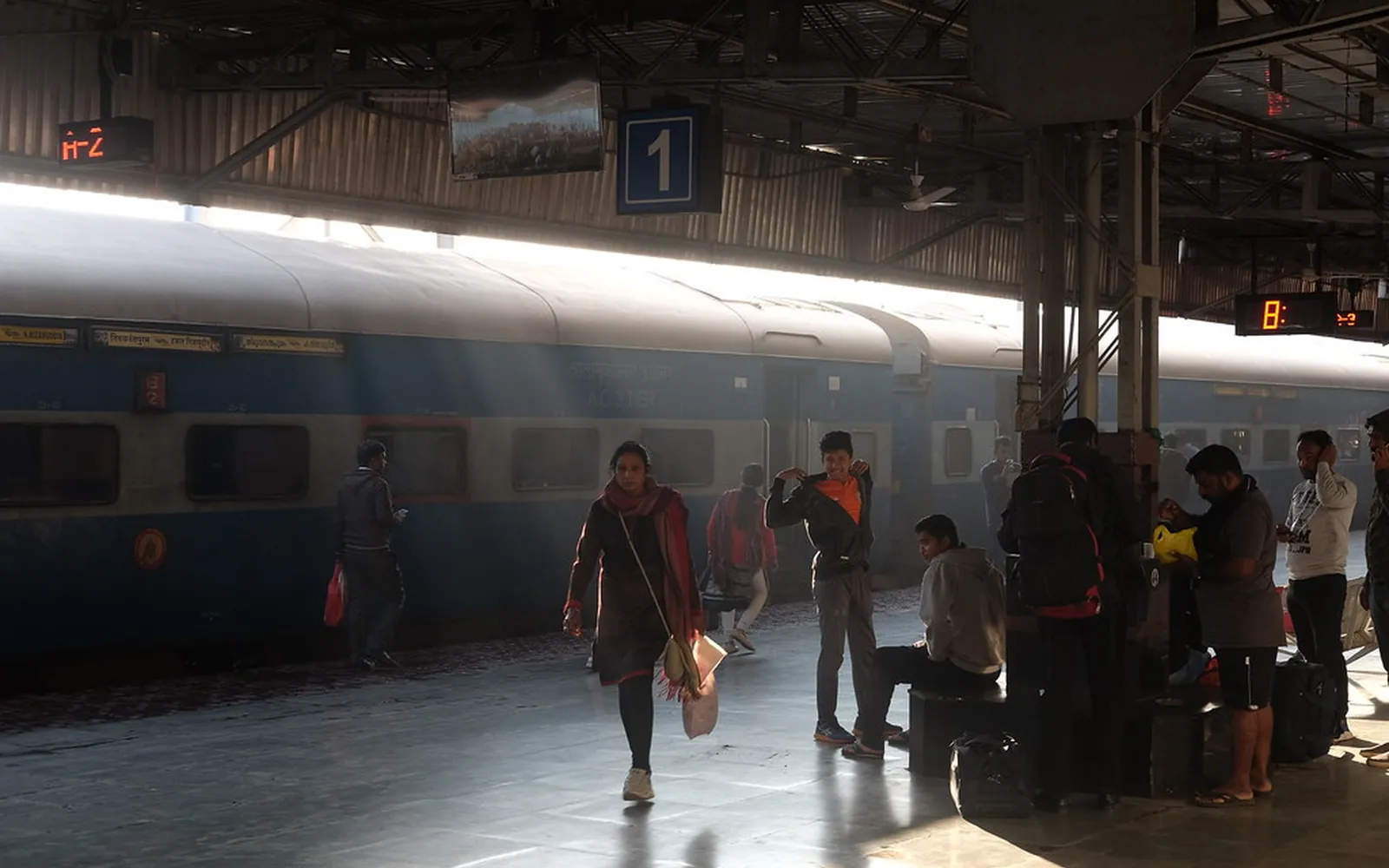
For trains, fog elsewhere on the route matters more than fog in Kota. Long-distance trains that cross the north Indian plains in December and January are often delayed. Check live running status on NTES before leaving for Kota railway station.
Fog and health
Cold, foggy mornings combined with poor air quality can trigger asthma and bronchitis. People with lung or heart conditions should avoid strenuous outdoor exercise on hazy mornings, keep medicines handy and check the AQI. Our Kota winter weather guide has more on staying warm indoors.
Fog for photographers and visitors
Misty winter sunrises over the Chambal can be beautiful, and the riverfront and ghats are at their most atmospheric then. If you plan a dawn visit, dress warmly, take care on steps and banks, and remember that visibility on the water can be very short. See Kota weather in December and Kota weather in January for the rest of the winter picture.
How IMD reports fog and visibility
IMD defines fog by visibility: fog is reported when water droplets in the air reduce visibility below 1 km, and the categories of dense and very dense fog refer to much lower visibility, down to a few tens of metres. Above 1 km, the reduction is described as mist (moist air) or haze (dry particles). This is why the Kota tables show many mornings with 1 to 4 km visibility but only a few fog days: most winter mornings here are misty or hazy rather than foggy.
When dense fog is expected, IMD includes it in its district warnings and nowcasts, and airports and railways issue their own operational advisories. The visibility you see at home can differ from the airport observation, so low-lying areas near the river, canals and open fields may be foggier than the city centre.
How Kota’s fog compares with other cities
Kota is one of the less foggy cities in north and central India. IMD’s 1991-2020 tables record about 2.9 fog days a year at Kota. For comparison, the same tables give about 72 fog days at New Delhi (Safdarjung), 52 at Lucknow and 33 at Patna, mostly from December to February, while Indore (about 6) and Bhopal (about 4) are closer to Kota. This matters for travel: even when Kota is clear, fog in the Gangetic plains can hold up trains and flights coming from Delhi, Lucknow or Patna. See Kota vs Delhi weather, Kota vs Lucknow weather and Kota vs Patna weather. For the hour-by-hour pattern of winter haze, see Kota weather by time of day.
Fog at more stations: north, east and Rajasthan
Six more IMD stations show how Kota fits into the wider winter picture. Chandigarh logs about 17.4 fog days a year (9.9 in January), Kolkata (Alipore) about 11.8, Agra (Taj) about 11.3, Ranchi about 8.0 and Gwalior about 6.1. Ajmer, like Kota, is rarely foggy, at about 2.1 days a year.
Fog days are only part of the story. Counting mornings at 08:30 IST with visibility of 1 km or less, Chandigarh has about 13.9 a year, Gwalior 13.0, Agra 10.1 and Kota 8.3, while Ranchi (4.7), Kolkata (3.0) and Ajmer (2.5) have fewer. So Kota’s winter mornings can be murkier than its low fog count suggests: mist and haze over the Chambal and the city often cut visibility without being logged as fog. Plan early road trips in December and January with that in mind. For city-by-city detail, see Kota vs Chandigarh weather, Kota vs Agra weather, Kota vs Gwalior weather and Kota vs Ajmer weather.
Related guides
- Kota winter weather
- Kota weather warnings for how IMD warnings work
- Kota weather by month
Frequently asked questions
Does Kota get fog?
Yes, but less than the Indo-Gangetic plains. IMD's 1991-2020 tables for Kota Airport count 2.9 fog days a year: 1.8 in January, 0.6 in February, 0.4 in December and 0.1 in November.
Which month has the most fog in Kota?
January. It has 1.8 fog days on average and about 4.1 mornings with visibility below 1 km at the 08:30 IST observation.
What is the difference between fog and haze?
Fog is made of tiny water droplets and usually forms on cold, calm, humid nights; visibility can fall below 1 km. Haze is made of dust, smoke and pollution particles in drier air; it reduces visibility to a few kilometres and often lasts longer.
Does fog delay trains at Kota?
Fog across north India in December and January can delay long-distance trains that pass through Kota, even when Kota itself is clear. Check live running status on NTES before leaving for the station.
Is Kota foggier than Agra or Chandigarh?
No. IMD's 1991-2020 tables give about 2.9 fog days a year at Kota, against about 11.3 at Agra (Taj) and 17.4 at Chandigarh. Kota does record about 8.3 mornings a year with visibility of 1 km or less, mostly in December and January, so early winter journeys still need care.
Sources
Editorial team, Kota
The Kota Weather team writes from Kota and builds every guide on official IMD climate data, with sources listed on each page.