Climate and seasons
Kota thunderstorms: when storms come and how often
Written by Kota Weather Editorial Team · Updated
Kota thunderstorms follow the seasons closely. Through the dry winter thunder is almost unheard of; in the hot weeks of April, May and June, storms build over the heated land and often arrive with dust; and through the monsoon, thunder and lightning accompany the heavier rain spells. Knowing when storms are likely helps with everything from planning a wedding to protecting crops and staying safe outdoors. This guide uses the India Meteorological Department’s (IMD) Climatological Tables 1991-2020 for the Kota Airport observatory (station 42452).
Averages do not tell you about today. For storms in the next few hours, check IMD’s district nowcast and the Kota weather forecast page.
Thunder, dust storm and hail days by month
| Month | Thunder days | Dust storm days | Hail days | Rainfall |
|---|---|---|---|---|
| January | 0.3 | 0.0 | 0.0 | 5.7 mm |
| February | 0.7 | 0.1 | 0.0 | 8.2 mm |
| March | 0.7 | 0.1 | 0.2 | 2.7 mm |
| April | 1.0 | 0.6 | 0.0 | 8.4 mm |
| May | 1.6 | 0.9 | 0.0 | 9.7 mm |
| June | 4.1 | 1.2 | 0.1 | 80.3 mm |
| July | 4.9 | 0.0 | 0.1 | 296.7 mm |
| August | 5.3 | 0.0 | 0.0 | 269.6 mm |
| September | 2.5 | 0.0 | 0.0 | 108.7 mm |
| October | 0.4 | 0.2 | 0.0 | 18.9 mm |
| November | 0.0 | 0.0 | 0.0 | 3.8 mm |
| December | 0.2 | 0.0 | 0.0 | 3.6 mm |
| Year | 21.7 | 3.0 | 0.4 | 816.2 mm |
A thunder day is a day on which thunder is heard at the observatory. It does not count how many storms there were or how strong they were, and a storm can strike one side of the city while the airport stays quiet. The figures are best read as a guide to the season, not a count of dangerous events.
Pre-monsoon storms: April to June
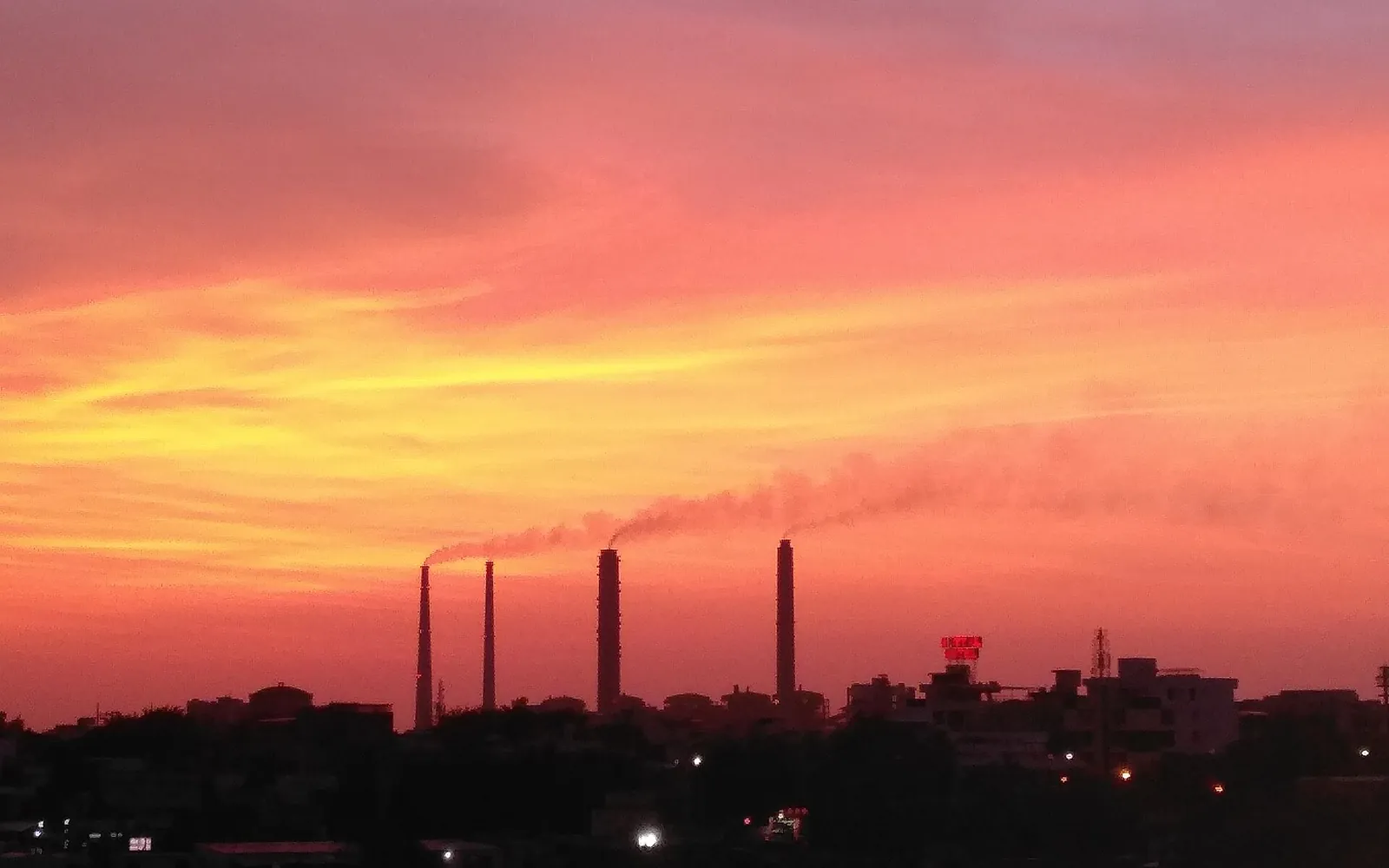
The first storm season comes before the monsoon. Intense heating over Rajasthan lifts hot air, and when moisture moves in from the south or a western disturbance passes to the north, tall storm clouds can form in the afternoon. In Kota these storms often look like this:
- A very hot, still afternoon, with clouds building to the west or south-west.
- A sudden, strong gust front, often carrying a wall of dust.
- A sharp drop in temperature, then brief heavy rain, lightning and thunder.
IMD’s tables count 3.0 dust storm days a year at Kota Airport, nearly all between April and June. June is the peak, with 1.2 dust storm days and 4.1 thunder days. The risk from these storms is less the rain than the wind: falling hoardings, branches, tin sheets and power lines. Our Kota dust storm guide covers what to do.
Monsoon thunderstorms: July to September
Once the monsoon is established, thunder comes with the rain. July averages 4.9 thunder days and August 5.3, the highest of the year. Monsoon storms tend to be less violent in their winds than pre-monsoon storms, but they bring heavy rain and frequent lightning. For people outdoors, lightning is the most dangerous part of a monsoon storm, and farm workers, herders and anyone in open ground are most at risk. Read Kota lightning safety for detailed advice, including the Damini app.
By September thunder days fall to 2.5, and after the monsoon withdraws they are rare.
Winter and spring storms
From December to March, thunderstorms are uncommon but not impossible. A western disturbance can bring cloud, a few showers, thunder and occasionally hail to Rajasthan. March has 0.2 hail days in IMD’s tables for Kota, the highest of any month. These events matter most to farmers, because hail and strong wind at that time of year can damage standing rabi crops such as wheat and mustard. Our Kota agromet advisory guide explains where farmers can find weather-based crop advice.
How IMD warns about thunderstorms
IMD issues thunderstorm warnings at several time scales:
- District warnings for the next few days, colour-coded from green to red. See Kota weather warnings for what each colour means.
- Nowcasts for the next few hours, issued for districts and many stations when storms are developing.
- Lightning alerts through the Damini app, developed by IITM Pune.
Official public alerts are also pushed through Sachet, NDMA’s common alerting platform.
Planning around storm season
- For outdoor events from April to September, have a covered fallback and a plan to move people indoors if thunder is heard.
- Tie down rooftop items and check that hoardings and temporary structures are secure before the pre-monsoon season.
- Keep a torch, charged phone and power bank ready, since storms often cut power.
- After a storm, avoid fallen wires and flooded areas.
Thunderstorms and power, water and phones
Storms in Kota often bring short power cuts, either because lines are switched off for safety or because wind brings down branches and poles. A little preparation helps:
- Keep phones and a power bank charged when storms are forecast for the afternoon.
- Unplug sensitive electronics such as computers and televisions during lightning; surge protectors help but do not stop a direct strike.
- Keep a torch rather than relying on candles.
- Store some drinking water in case pumps stop during a long outage.
If a power line is down, stay well away and report it to the electricity distribution company. Never touch a wire, even if it looks dead.
Thunder days compared with other cities
IMD’s 1991-2020 tables give Kota about 21.7 thunder days a year. Several nearby cities hear thunder more often: about 52 days at Lucknow, 43 at New Delhi (Safdarjung), 30 at Indore and 27 at Patna. Bhopal (Bairagarh) records fewer, about 12, since much of its heavy monsoon rain falls without thunder. Hail is rare everywhere in this group: about 0.4 days a year at Kota and Lucknow, 1.5 at Delhi and 1.2 at Patna. A passing storm also shows up in the air pressure, which dips and then rises; see Kota air pressure. For comparisons, see Kota vs Lucknow weather and Kota vs Bhopal weather.
Thunder in the east, north and Rajasthan
Adding six more stations makes Kota’s position clearer. Kolkata (Alipore) hears thunder on about 83.0 days a year, with 14.8 in September alone, and records about 6.0 squall days a year, mostly from March to May. Ranchi (50.5) and Chandigarh (50.1) are also much stormier than Kota. Gwalior (27.1) is a little above Kota’s 21.7, Ajmer (21.2) is almost the same, and Agra (Taj) is quieter at about 13.6.
Hail is uncommon everywhere in this group, but Ranchi stands out with about 2.1 hail days a year, mostly in April and May; Ajmer (1.0), Chandigarh (0.9) and Kolkata (0.5) follow, with Kota at about 0.4. Students arriving from Kolkata or Ranchi are used to frequent storms; in Kota the difference is that storms come in a shorter season and are often preceded by dust in May and June. See Kota vs Kolkata weather, Kota vs Ranchi weather and Kota vs Chandigarh weather.
Related guides
- Kota weather in June for the start of the storm season
- Kota monsoon for the rainy season as a whole
- IMD rainfall categories for what warnings mean in millimetres
- Kota wind for wind patterns across the year
Frequently asked questions
When is thunderstorm season in Kota?
Thunder is most frequent from June to September, with 4.1 to 5.3 thunder days a month in IMD's 1991-2020 tables for Kota Airport. Pre-monsoon storms also occur in April and May, and occasional winter storms come with western disturbances.
How many thunderstorms does Kota get in a year?
IMD counts an average of 21.7 days a year on which thunder is heard at Kota Airport. Several storms can occur on one day, and storms can hit one part of the district while another stays dry.
Does Kota get hailstorms?
Rarely. The 1991-2020 normal is 0.4 hail days a year at the observatory, mostly in March and in June and July. Hail can still damage crops in the wider district when it does fall.
Where can I get thunderstorm warnings for Kota?
Use IMD's district-wise warnings and nowcasts, the Mausam app, and the Damini app for lightning alerts. Sachet carries official public alerts from NDMA.
Does Kota get more thunderstorms than Kolkata or Ranchi?
No, far fewer. IMD's 1991-2020 tables give Kota about 21.7 thunder days a year, against about 83.0 at Kolkata (Alipore) and 50.5 at Ranchi. Kota's storms are concentrated in June to August, while Kolkata and Ranchi have long storm seasons that start in March and April.
Sources
Editorial team, Kota
The Kota Weather team writes from Kota and builds every guide on official IMD climate data, with sources listed on each page.