Climate and seasons
Kota monsoon: when the rain arrives and what it brings
Written by Kota Weather Editorial Team · Updated
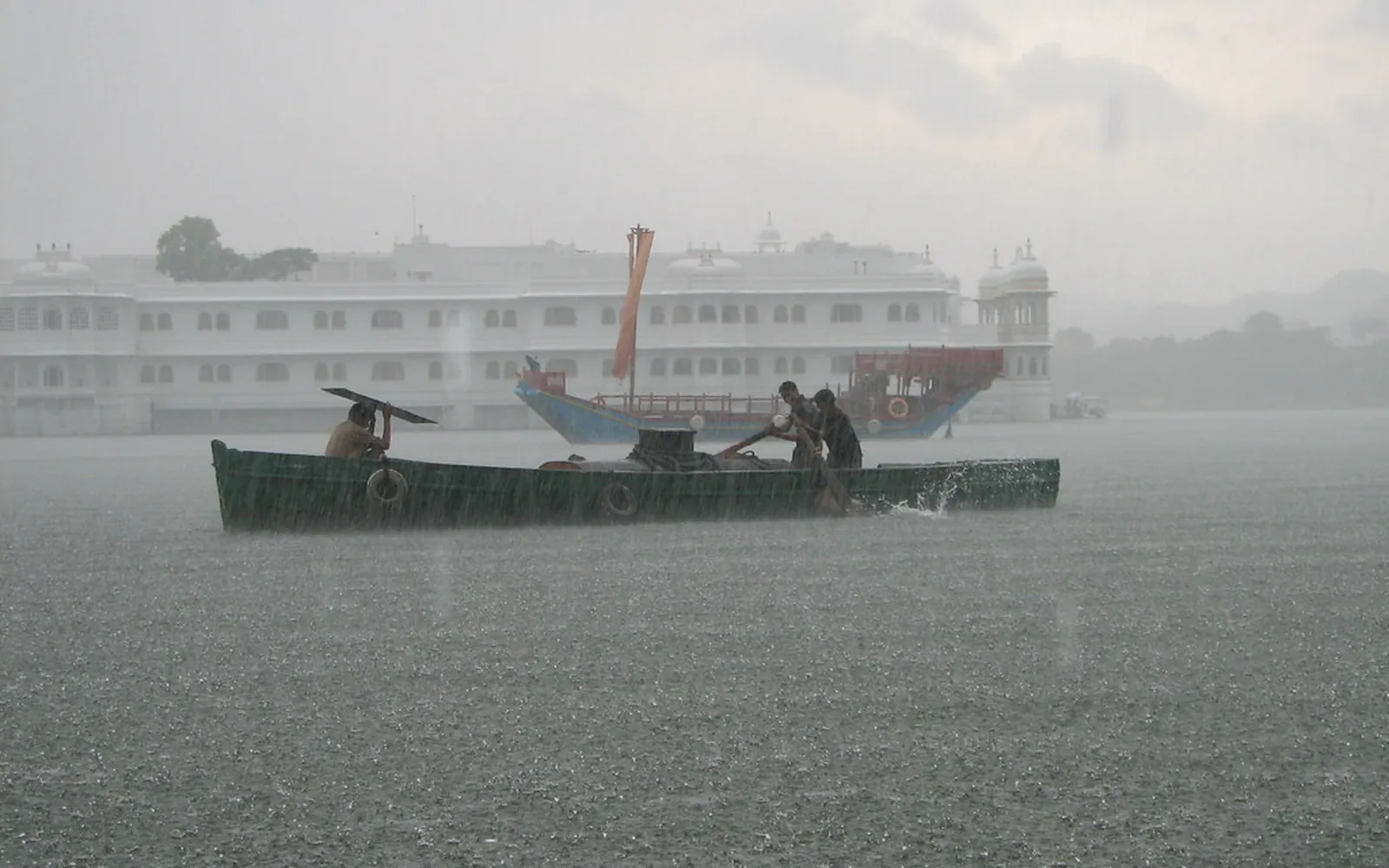
The Kota monsoon is short, intense and the single most important event in the city’s weather year. In roughly three months, from late June to late September, Kota receives about nine-tenths of its annual rain. The heat breaks, the Chambal valley turns green, the dams fill, and daily life adjusts to downpours, humidity and the occasional flooded underpass. This guide explains when the rains normally arrive and leave, what each monsoon month is like, and how to plan around them.
When the monsoon arrives
The southwest monsoon enters Rajasthan from the south-east, so the Hadoti region around Kota is one of the first parts of the state to get it. In a typical year the monsoon reaches the Kota area in the last part of June. Some years it arrives a week or more early; in others a long pause in its northward progress delays it into July.
Before the monsoon sets in properly, June often brings pre-monsoon thunderstorms: a hot, sticky afternoon, a wall of dust and wind, a short heavy shower, and then heat again the next day. These storms are not the monsoon, but they are often the first sign it is close.
The best way to know when the monsoon has actually arrived is IMD’s daily “northern limit of monsoon” map, published on its website through June and July.
How much rain falls, month by month
IMD’s 1991-2020 normals for Kota Airport:
| Month | Normal rainfall | Rainy days | Mean max | Mean min |
|---|---|---|---|---|
| June | 80.3 mm | 4.7 | 40.3 C | 29.5 C |
| July | 296.7 mm | 11.6 | 34.3 C | 27.0 C |
| August | 269.6 mm | 11.2 | 32.2 C | 25.8 C |
| September | 108.7 mm | 5.8 | 33.9 C | 25.5 C |
| June to September | 755.3 mm | 33.3 |
The annual normal is 816.2 mm, so the four monsoon months account for about 93 percent of Kota’s rain. July and August alone bring about 566 mm, more than two-thirds of the year’s total. For year-round figures, see Kota rainfall.
What each monsoon month is like
June: heat, humidity and the first storms
The first half of June is often as hot as May, with rising humidity making it feel worse. Dust storms and thunderstorms become more frequent. Once the monsoon arrives, temperatures drop by several degrees within days.
July: the monsoon at full strength
The wettest month. Rain usually comes in active spells of several days with heavy showers, separated by breaks of hot, humid sunshine. Afternoon temperatures fall to the mid-30s. Roads in low-lying parts of the city can flood during heavy downpours, and the Chambal starts to rise.
August: green and full
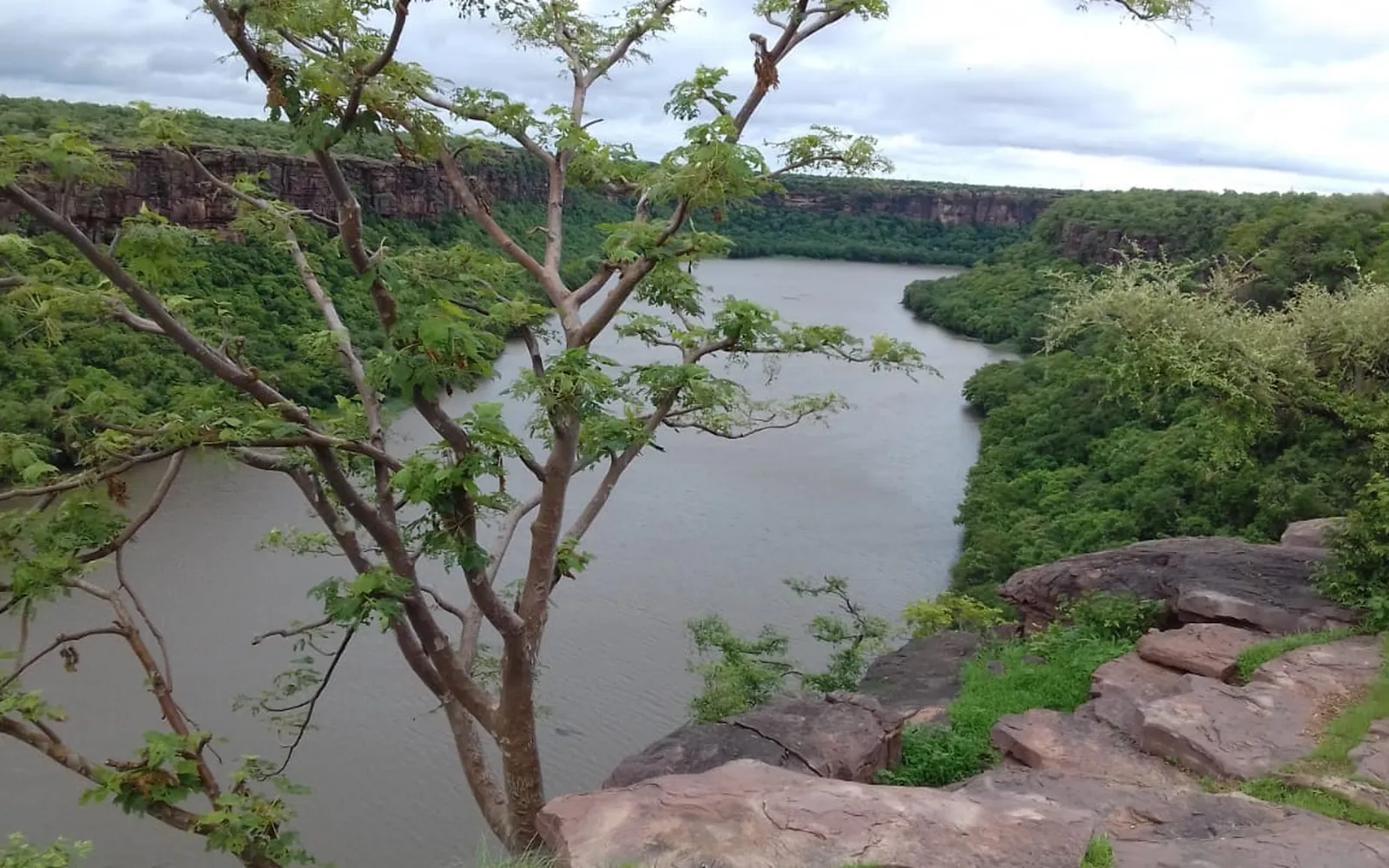
Almost as wet as July, and the coolest month by day. The countryside is at its greenest, waterfalls in the Mukundra hills and gorges around Kota are flowing, and the dams upstream are filling. This is when heavy rain over the catchment in Madhya Pradesh and Rajasthan can lead to water releases through Kota Barrage; see Kota Barrage and Chambal flood season.
September: the retreat
Rain becomes less frequent through the month. Sunshine returns, the air stays humid for a while, and afternoons warm up again to around 34 C. In some years, a late heavy spell in September brings the season’s biggest river levels.
When the monsoon leaves
Monsoon withdrawal starts in north-west India, with IMD’s normal date for the start of withdrawal from west Rajasthan in mid-September. It then moves east and south. Kota is usually clear of the monsoon by late September or early October. After that, October averages just 18.9 mm of rain and less than one rainy day.
Breaks and heavy spells
Two features of the monsoon catch visitors out:
- Breaks: the monsoon can pause for a week or more, bringing hot, humid sunshine and little rain. A dry week in July is not unusual and does not mean the season has failed.
- Heavy spells: at the other extreme, a deep low-pressure system moving across central India can bring very heavy rain for two or three days. These events produce most flooding problems in the region. IMD issues orange or red warnings ahead of them; see Kota weather warnings.
Reading monsoon warnings
Monsoon warnings use IMD’s fixed rainfall categories, measured over 24 hours: heavy rain is 64.5 to 115.5 mm, very heavy 115.6 to 204.4 mm and extremely heavy 204.5 mm or more. Those numbers are large compared with Kota’s normals: one very heavy day can bring up to about two-thirds of an average July’s 296.7 mm. Warnings also say how widespread the rain will be, with phrases like “at isolated places”, which means some locations in the district, not all. Our IMD rainfall categories guide explains the terms, including the seasonal labels “deficient”, “normal” and “excess” that appear in monsoon reports.
Heavy monsoon spells often come with thunder and lightning, especially early in the season and during breaks. If you hear thunder, get indoors; the free Damini app from IITM Pune alerts you to lightning nearby. See Kota lightning safety.
Humidity in the monsoon
The rain brings the temperature down, but humidity goes up sharply. Evening relative humidity averages 62 percent in July and 69 percent in August, against 15 percent in May. That makes the monsoon feel sticky, slows the drying of clothes and encourages mould and mosquitoes. See Kota humidity.
Living with the monsoon in Kota
- Getting around: heavy showers can flood underpasses and low roads quickly. Wait out the worst of a downpour if you can, and never drive or walk through moving water.
- Electricity and connectivity: storms can cause short power cuts. Keep a phone charged during warned spells.
- Health: stagnant water after rain encourages mosquitoes, so use repellent and empty standing water around homes and hostels.
- Lightning: stay indoors during thunderstorms; avoid open grounds, rooftops and trees.
Visiting Kota in the monsoon
The monsoon is Kota’s quiet season for tourism. The rewards are real: green gorges, full lakes, dramatic skies and fewer crowds. The trade-offs are humidity, heavy showers that disrupt plans, and some outdoor activities, such as river boat trips, pausing at high water. Our Kota sightseeing by season guide shows which places suit the wet months, and what to pack for Kota has a monsoon list.
If you would rather avoid the rain, October to March is the dry, comfortable half of the year; see best time to visit Kota.
Monsoon rain compared with other cities
IMD’s 1991-2020 tables give Kota about 755 mm of rain from June to September (80.3 + 296.7 + 269.6 + 108.7 mm). For comparison, the same four months bring about 631 mm to New Delhi (Safdarjung), 750 mm to Lucknow, 883 mm to Indore, 928 mm to Patna and 1002 mm to Bhopal (Bairagarh). Kota’s rain is concentrated in July and August, while cities to the south and east start earlier in June and stay wet longer into September.
The monsoon also changes Kota’s sky and air: mean cloud reaches about 6 oktas in July and August, station pressure is at its lowest of the year, and the wet bulb temperature peaks. See Kota cloud cover, Kota air pressure and Kota wet bulb temperature. City comparisons: Kota vs Bhopal and Kota vs Patna.
Frequently asked questions
When does the monsoon arrive in Kota?
Usually in the last part of June, though in some years it is a week or more early or late. IMD tracks the monsoon's northern limit daily and publishes it on its website, which is the way to know the actual date in any given year.
Which month has the most rain in Kota?
July, with a 1991-2020 normal of 296.7 mm. August is close behind at 269.6 mm. Both average around 11 to 12 rainy days.
Is the monsoon a good time to visit Kota?
It can be, if you like green landscapes, full rivers and fewer tourists. Expect humidity, heavy showers and some disruption, and check whether boat trips and gorge viewpoints are open before you go.
When does the monsoon leave Kota?
Withdrawal starts in west Rajasthan, with a normal date in mid-September, and moves east. Kota is usually clear of the monsoon by late September or early October, after which rain becomes rare.
Does Kota get floods in the monsoon?
Local waterlogging after heavy rain is common. River flooding is less frequent and depends on heavy rain over the Chambal catchment upstream, which can force large releases through the dams and Kota Barrage.
Sources
Editorial team, Kota
The Kota Weather team writes from Kota and builds every guide on official IMD climate data, with sources listed on each page.