Forecast and warnings
Kota air quality: reading the AQI through the seasons
Written by Kota Weather Editorial Team · Updated
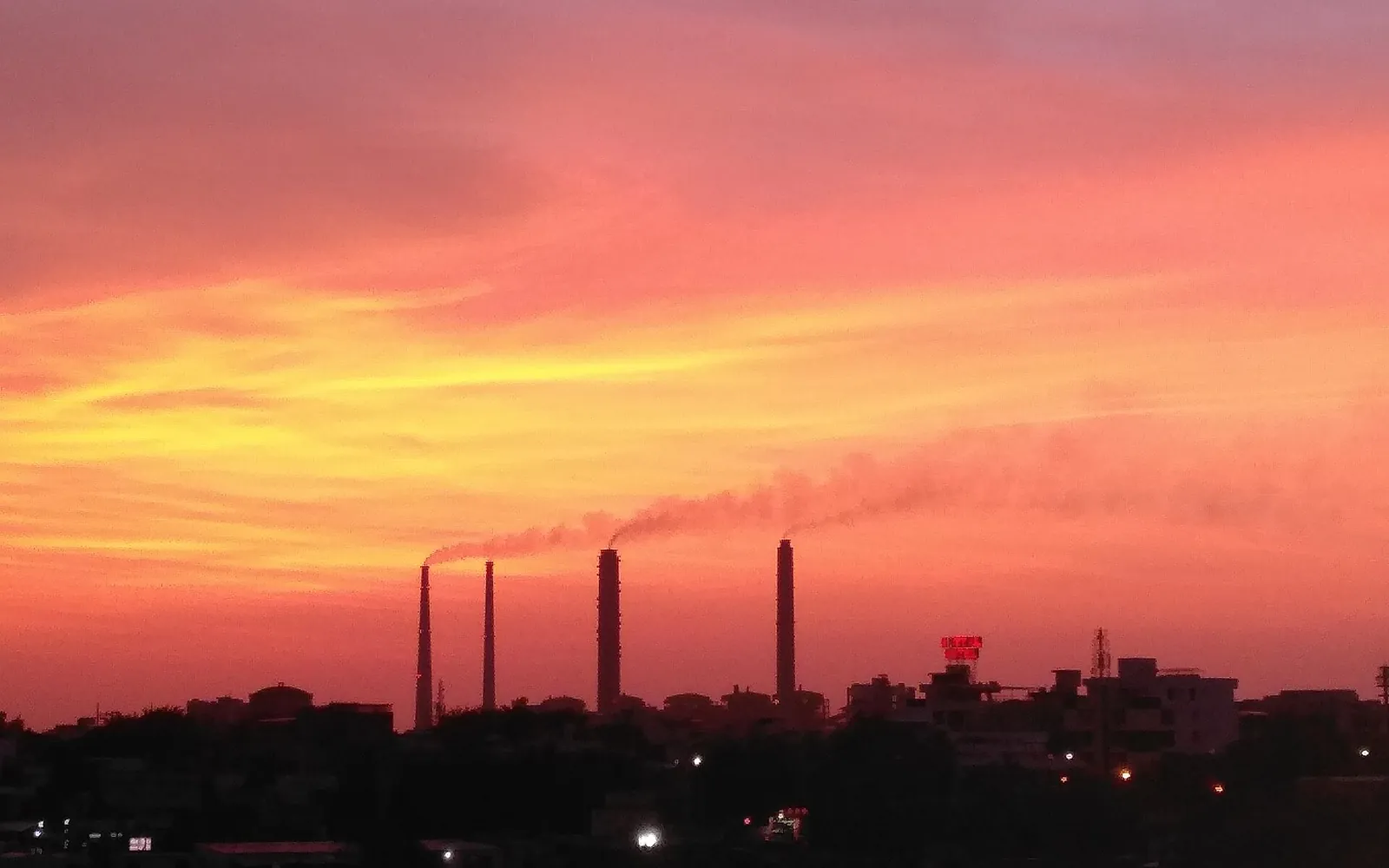
Kota air quality changes with the seasons as much as the temperature does. Clear, windy afternoons can be fresh, while a calm winter dawn can leave a grey haze over the city and the Chambal until mid-morning. Because Kota has official continuous monitoring stations, you do not need to guess: the national Air Quality Index (AQI) published by the Central Pollution Control Board (CPCB) shows the readings. This guide explains where the numbers come from, how to read them, which months are usually the worst, and what to do when the index is high.
We do not publish live AQI numbers on this site. For today’s reading, use the official CPCB dashboard or the Sameer app described below.
Where Kota’s air quality is measured
Kota’s official readings come from Continuous Ambient Air Quality Monitoring Stations (CAAQMS), which measure pollutants automatically through the day and feed the CPCB national system. According to a Rajasthan Environment Department report filed with the National Green Tribunal, Kota’s first continuous station, at Shreenath Puram Stadium, has operated since 2016, and two more stations, at Nayapura and Vigyan Nagar, began continuous monitoring in 2023. The same report lists Kota among Rajasthan’s non-attainment cities under the National Clean Air Programme, meaning its air has not consistently met national standards.
Station lists change over time, so check the CPCB dashboard to see which Kota stations are reporting today. Readings can differ between stations, because each one reflects its own neighbourhood: traffic, construction and industry nearby all matter.
How to read the AQI
India’s National Air Quality Index turns the readings of several pollutants (including PM2.5, PM10, nitrogen dioxide, sulphur dioxide, carbon monoxide, ozone and ammonia) into one number from 0 to 500. The pollutant with the worst sub-index sets the overall AQI, and in north Indian cities that is usually PM2.5 or PM10.
| AQI | Category | What CPCB says about health impact |
|---|---|---|
| 0-50 | Good | Minimal impact |
| 51-100 | Satisfactory | Minor breathing discomfort to sensitive people |
| 101-200 | Moderate | Breathing discomfort to people with lung disease such as asthma, and discomfort to people with heart disease, children and older adults |
| 201-300 | Poor | Breathing discomfort to most people on prolonged exposure |
| 301-400 | Very Poor | Respiratory illness on prolonged exposure |
| 401-500 | Severe | Affects healthy people and seriously impacts those with existing diseases |
Source: CPCB National Air Quality Index.
Two tips for reading it well. First, look at the hour of the reading, not just the daily figure: the morning and afternoon can fall in different bands. Second, look at which pollutant is driving the number. A high PM10 reading on a windy afternoon usually means dust; a high PM2.5 reading on a still morning usually means smoke and combustion.
How weather drives Kota’s air quality
Pollution levels depend on what is emitted, but the weather decides how much of it stays near the ground.
Winter: the inversion problem (November to January)
On clear, calm winter nights the ground cools fast and a layer of cold air settles under warmer air above it. This temperature inversion acts like a lid, trapping smoke from vehicles, cooking fires, waste burning and industry close to the ground. That is why dawn in December or January can be hazy even on a cloudless day. As the sun warms the ground, the lid breaks and the air mixes, so readings usually improve by late morning or afternoon. Festival fireworks in October or November can add a short spike. See Kota winter weather and Kota weather in December for the rest of the winter picture.
Hot season: dust (April to June)
In summer the air mixes well, which helps, but strong, dry westerly winds lift dust from bare ground and carry it from the desert. On those days PM10 often dominates. Dust storms before the monsoon can push readings up sharply for a few hours. Our Kota dust storm guide covers what to expect.
Monsoon: the cleanest months (July to September)
Rain washes particles out of the air, and moist winds from the sea bring cleaner air. July and August, the wettest months with nearly 300 mm and 270 mm of rain on average, usually have the best air of the year. See Kota monsoon.
Post-monsoon (October)
As the rain stops and nights lengthen, the air gets calmer and drier, and the winter pattern begins to build.
Calm air by month: the numbers behind winter haze
IMD’s Climatological Tables 1991-2020 for Kota Airport show how often the air is calm at the 08:30 IST observation, and the mean wind speed for each month:
| Month | Calm mornings | Mean wind speed |
|---|---|---|
| June | 5% | 11.1 km/h |
| July | 7% | 10.5 km/h |
| October | 40% | 3.9 km/h |
| November | 56% | 3.0 km/h |
| December | 62% | 2.8 km/h |
| January | 51% | 3.3 km/h |
When the wind is calm, pollution from traffic, cooking, waste burning and industry is not carried away, so it builds up near the ground overnight. Between October and January most mornings are calm or nearly so, which fits the seasonal pattern in the AQI. In the monsoon months the wind is stronger and rain washes particles out of the air. Our guides to Kota fog and Kota wind explain the same pattern from the visibility and wind side.
Protecting your health on bad air days
- Time your outdoor exercise. On hazy winter mornings, walk or run later in the day, after the air has mixed.
- Reduce effort, not just time. On Poor days, swap a run for a walk, or exercise indoors.
- Protect the vulnerable. Children, older adults, pregnant women and people with asthma, lung or heart disease feel bad air first.
- Use a well-fitting mask if you must be outside for long. A properly fitted N95-type mask filters fine particles far better than a cloth one.
- Keep indoor air clean. Avoid burning incense, coal or wood indoors on bad days, and ventilate when outdoor air is better, usually in the afternoon.
- Watch for symptoms. Coughing, wheezing, chest tightness or breathlessness that does not settle are reasons to see a doctor.
Air quality for students and early risers
Many students in Kota start their day very early, which in winter is exactly when air quality tends to be worst. If you walk or cycle to class at dawn, consider a mask on hazy mornings and save outdoor exercise for the afternoon. Our Kota weather for students guide puts this alongside heat, rain and cold through the coaching year.
AQI and the daily weather check
Air quality belongs in the same quick morning check as the forecast and any warnings. Our Kota weather today page shows where to look for each, and Kota weather warnings explains IMD’s colour-coded alerts. For more on how the city’s humidity and wind change through the year, see Kota humidity.
Frequently asked questions
Where can I check the AQI in Kota today?
On the Central Pollution Control Board (CPCB) national AQI dashboard and its Sameer app, which show readings from Kota's continuous monitoring stations. Third-party apps often repackage the same CPCB data.
How many air quality stations does Kota have?
A Rajasthan Environment Department report to the National Green Tribunal lists a continuous station at Shreenath Puram Stadium operating since 2016, and two more at Nayapura and Vigyan Nagar from 2023. Check the CPCB dashboard for the stations currently reporting.
When is air pollution worst in Kota?
Usually on still, cold mornings from November to January, when smoke and dust are trapped near the ground, and on dusty, windy days in the hot season. Monsoon rain usually clears the air.
What AQI is safe for outdoor exercise?
CPCB describes Good and Satisfactory as minimal to minor impact. In the Moderate band people with lung or heart disease, and children and older adults, may feel discomfort. At Poor and above, most people should cut prolonged outdoor exertion.
Is the AQI the same as the weather forecast?
No. The AQI measures pollutants such as PM2.5 and PM10; the weather forecast covers temperature, wind and rain. The two are linked, because calm air traps pollution and rain washes it out.
Sources
- IMD Data Service Portal: Climatological Tables 1991-2020 (station Kota, 42452)
- CPCB National Air Quality Index
- CPCB AQI dashboard
- PRANA: National Clean Air Programme portal (CPCB)
- Rajasthan Environment Department report to the NGT on air quality in Rajasthan cities (OA 687 of 2023)
- WHO fact sheet: ambient (outdoor) air quality and health
Editorial team, Kota
The Kota Weather team writes from Kota and builds every guide on official IMD climate data, with sources listed on each page.